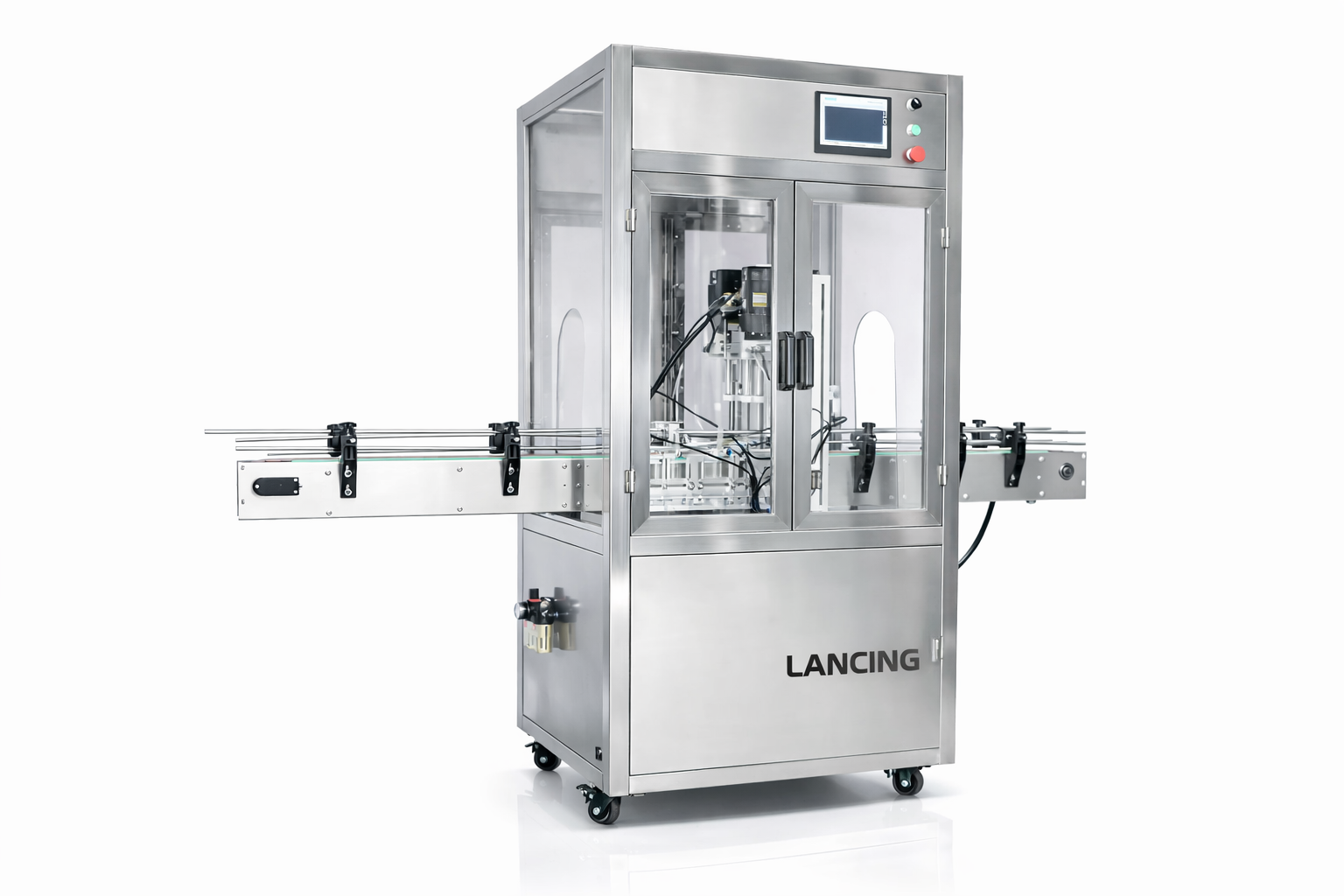
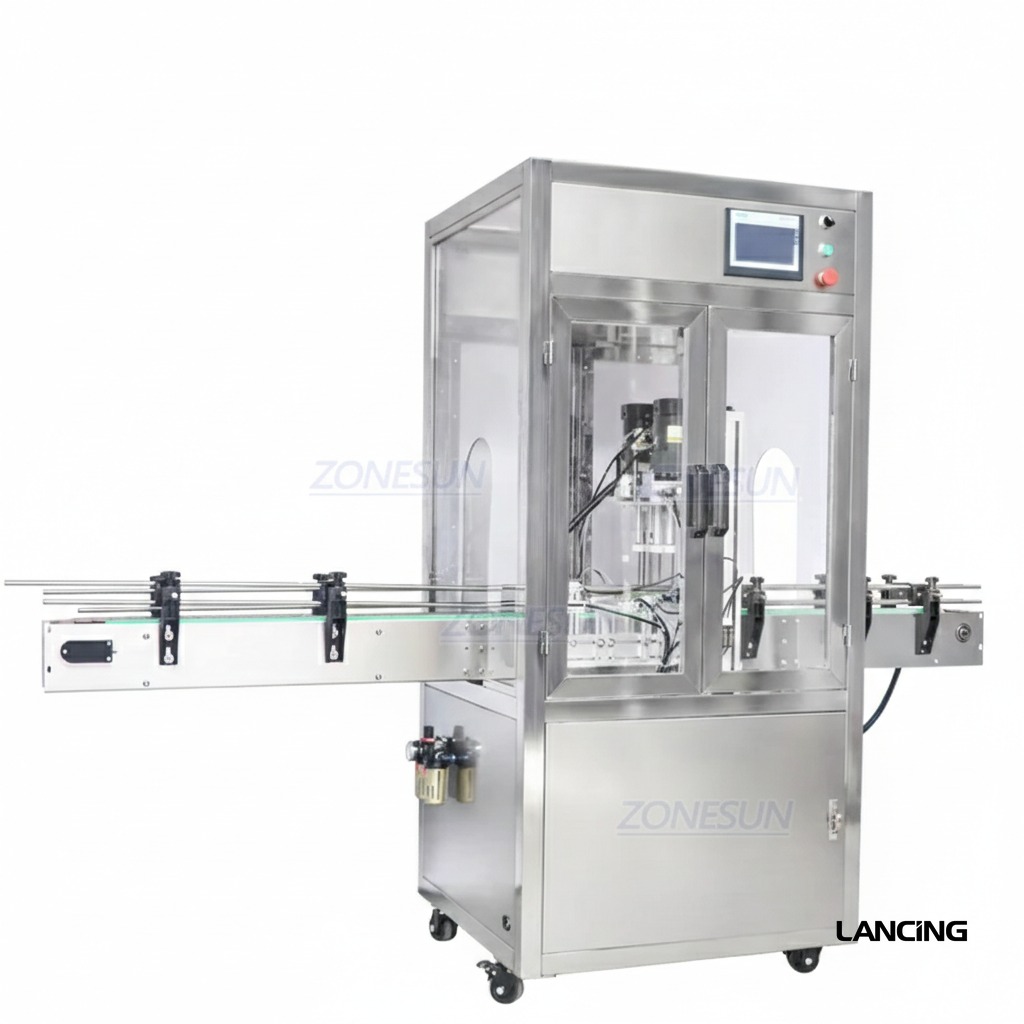
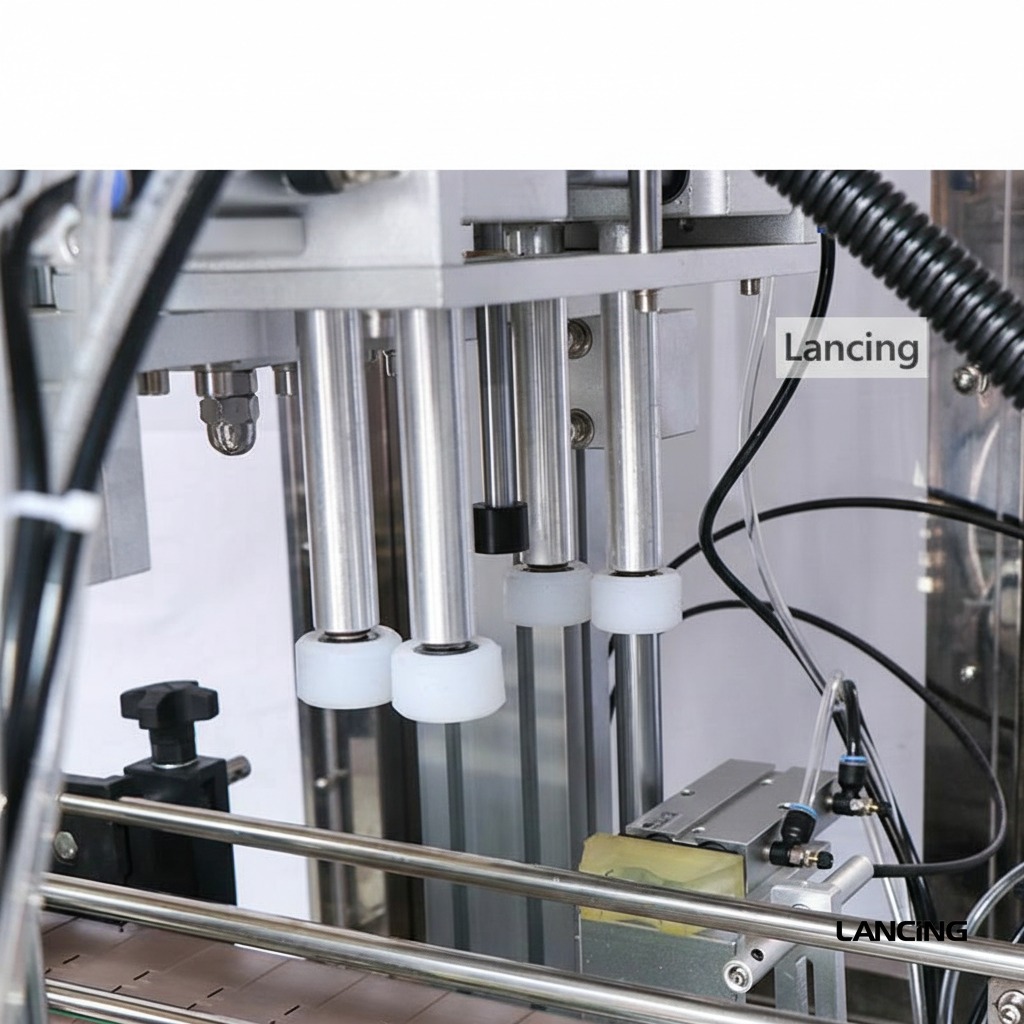
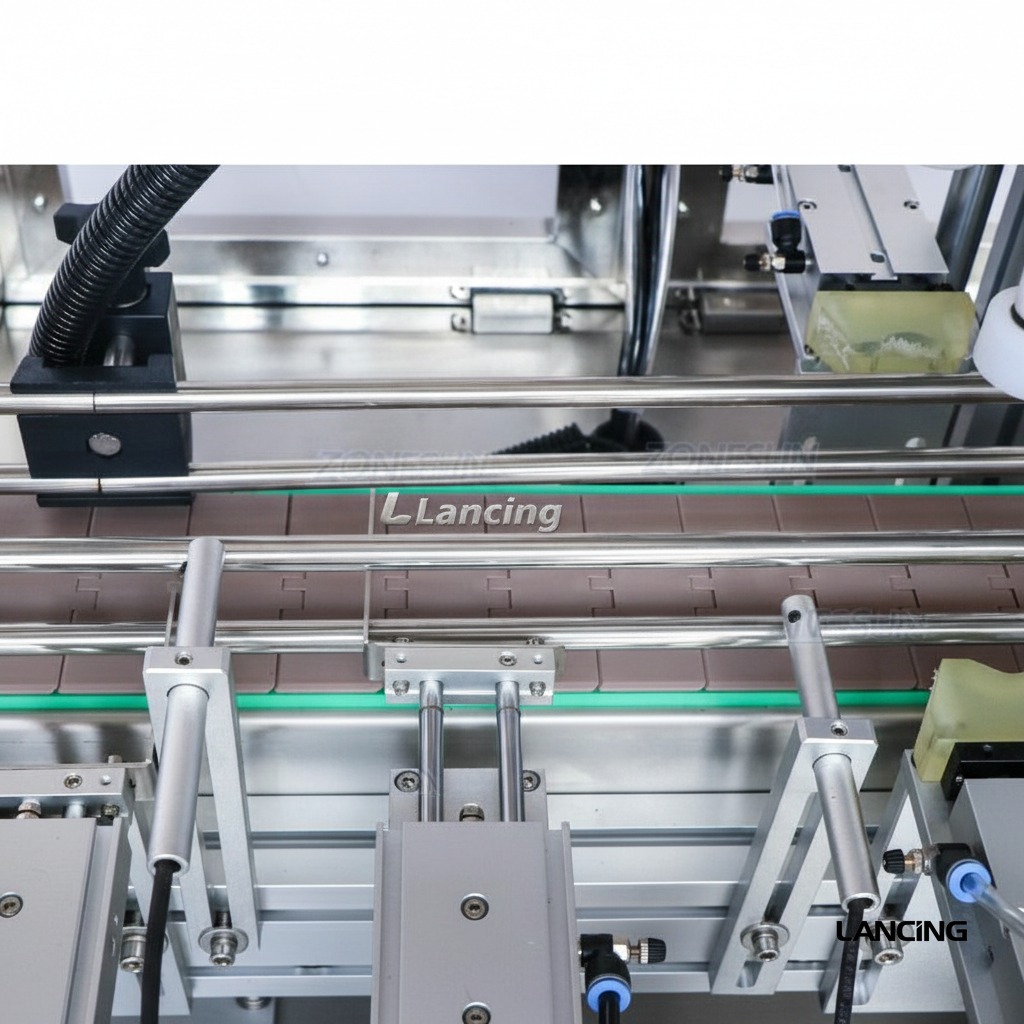
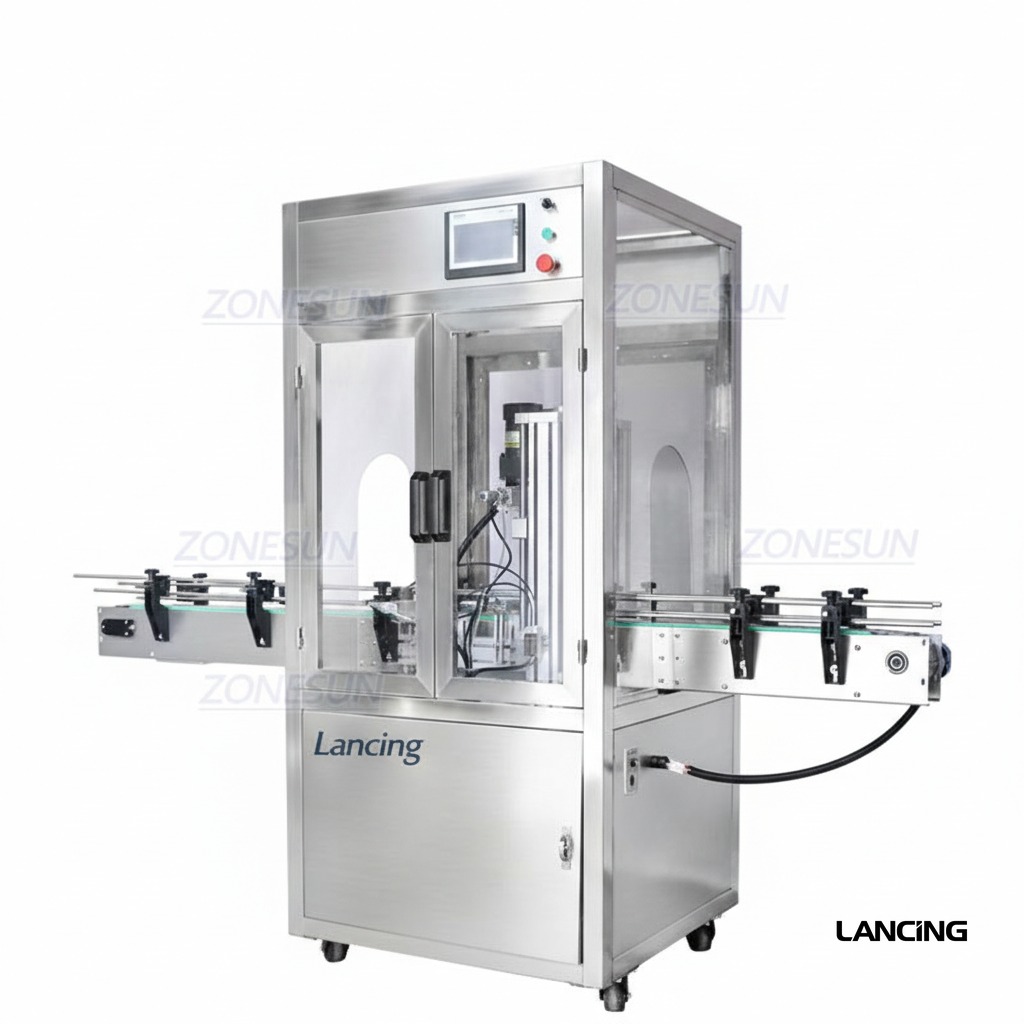
Machine gallery
Auto‑scrolling. Hover to pause.
Tip: Reorder images in the product manager — this carousel follows your order.
Specifications
Reference specification table. Final configuration may vary with options and scope.
| Parameter | Value |
|---|
| Machine Specifications – LU-XG440DC Automatic Capping Machine Model |
LU-XG440DC Bottle Height Range: 50–350mm Cap Diameter Range: 20–50mm Working Speed: 0–40 bottles/min (varies by bottle and cap type) Voltage: AC 220V / 110V, 50–60Hz, 300W Air Pressure Requirement: 0.4–0.6 MPa Capping Torque: 4–9 kgf·cm Machine Dimensions: Approx. 880 × 840 × 1940mm Package Dimensions: Approx. 1150 × 1000 × 2080mm Gross Weight: Approx. 270kg |
CAD / dimensions
CAD/dimensions are provided in a pop‑out viewer.
No CAD/dimensions drawing uploaded yet.
Site requirements
- Final requirements depend on the chosen configuration. Ask for confirmed power, air and footprint details for your line layout.
For the most accurate proposal, include: product viscosity/foaming, container size, closure type, and required units per hour.
Quick answers
Key answers buyers and engineers often need before shortlisting this machine.
What is Automatic Bottle Capping Machine used for?
The Lancing UK LU-XG440DC is designed for precise cap tightening across various bottle types, including droppers, sprayers, and beverages. Its integrated dust cover ensures hygienic operation, making it ideal for use in pharmaceutical, cosmetic, chemical, and beverage production lines
What output can Automatic Bottle Capping Machine achieve?
Final throughput depends on the product, container, fill volume and level of automation selected for the project
What utilities or site requirements should I plan for?
Final requirements depend on the chosen configuration. Ask for confirmed power, air, footprint and utility details for your line layout before purchase
Can Lancing UK help match this machine to my product and container?
Yes. Lancing UK can review your product, container or pack style, target output and site constraints to confirm whether this machine is the right fit before supply.
Talk to a specialist
We’ll confirm suitability, options, integration, and realistic throughput for your product.
Project planning notes
Capping projects are usually defined by closure style, bottle or jar stability, torque repeatability and the way caps are presented to the machine. The best shortlist often depends as much on changeovers and cap feeding as on nominal speed.
- Confirm the closure type, torque expectation and tamper-evidence requirement.
- Check whether the container presentation and line flow are stable through the capping step.
- Review whether operator training or cap-feed support will matter during day-to-day production.
Budget, timing and quote planning
Useful commercial checks before you shortlist or request a final quotation.
Shortlisting automatic bottle capping machine – dust cover is usually about more than the base machine price. Buyers normally need to confirm closure type, cap feeding, torque control and container stability, then check how that scope fits the wider line, labour model and growth plan.
When comparing this option commercially, ask whether quoted performance is based on your real product and pack, what change parts or feeding equipment are required, what utilities still need confirming and whether installation, FAT, commissioning or aftercare sit inside the same budget.
- Confirm the exact product and pack format the quote is based on.
- Check output assumptions, changeover expectations and operator involvement.
- List any utilities, footprint, guarding or line-interface constraints on site.
- Confirm whether FAT, delivery, commissioning, training or spares support are included.
Enquire about this machine
Send a message and we’ll respond with configuration options, pricing guidance and lead times.